Poems from Sakon Nakhon
T
he hot season
is a time of rest,
when the soil turns to sand,
and all that was green
turns brittle and brown,
a time to drink sato
in a sala by the pond,
listening to mor lam and
the sounds of som dtam
being made,
a time
to set the world aside
and let the heart recuperate,
from what's been lost
and what's been
gained.
#15
ยามร้อนระอุ ผู้คนพักผ่อน ดินแห้งเป็นทราย
พฤกษาเขียวขจีกลายเป็นสีน้ำตาล
สาโทเย็นชื่นพร้อมดื่มในศาลาริมสระใส
เสียงหมอลำและส้มตำแว่วมาไกล
ขอพักวางโลกภายนอกไว้
เพื่อไตร่ตรองซึ่งสิ่งเสียไปและสิ่งได้มา
พร้อมฟื้นฟูจิตใจให้สดใสเหมือนใหม่อีกครั้ง
yaam-ráwn rá-u · pôo-kon pák-pàwn · din-hâeng bpen saai
préuk-săa kĭeow-kà-jee glaai bpen sĕe-nám-dtaan
săa-toh yen-chêun práwm dèum nai săa-laa rim sà-săi
sĭang mŏr-lam láe sôm-dtam wâew maa glai
kŏr pák waang lôhk paai-nâwk wái
pêua dtrài-dtrong sêung sìng-sĭa bpai láe sìng dâai maa
práwm féun-foo jit-jai hâi sòt-săi mĕuan mài èek-kráng
Thai Translations
The goal of the Thai translations in Poems from Sakon Nakhon is to help Thai English students better understand the poems, as well as assist learners of the Thai language. Therefore, the translations do not follow the rules of any particular style of traditional Thai poetry, which are highly structured
The translations might be described as free verse or a modern, free-form rai-inspired style of Thai poetry, retaining the flowing, narrative essence of "rai" while adapted to a contemporary context. They use some rhyme and alliteration to make the translation pleasing to the ear when spoken, though they do not adhere to a fixed rhyme scheme or meter.
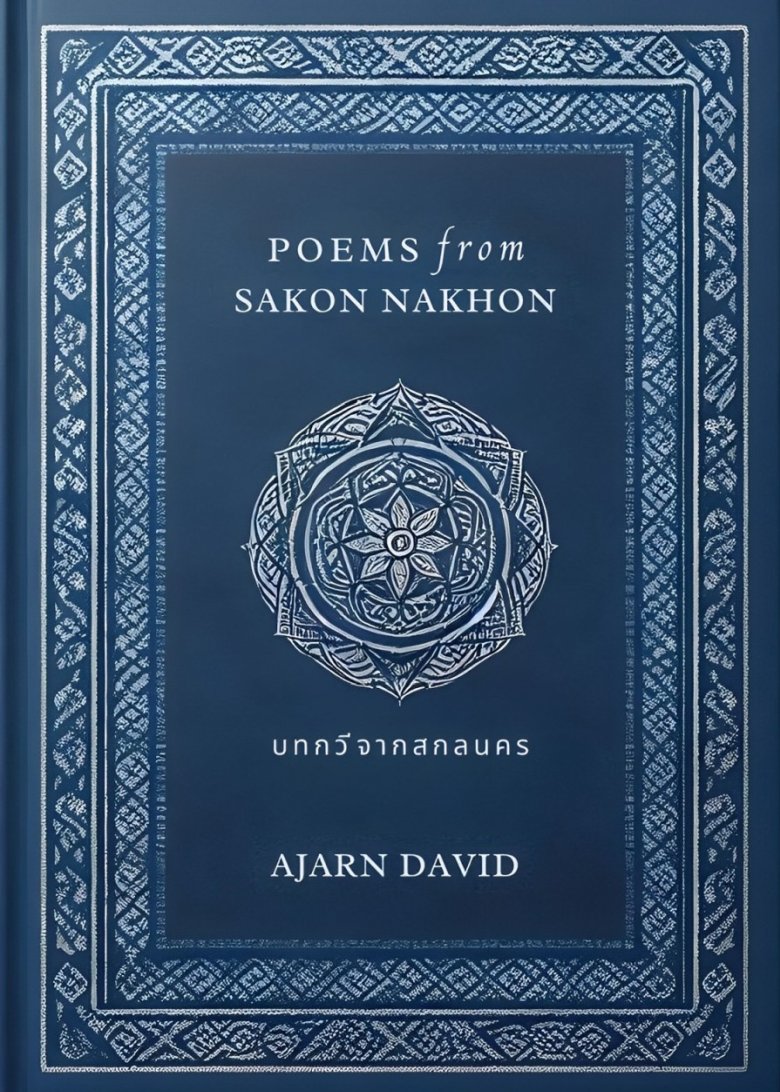
Poems from Sakon Nakhon
Author: Ajarn David
Genre: Free Verse Poetry
Pages: 182
Published: 2025 by Ysaan Books
Thai Poetry in English
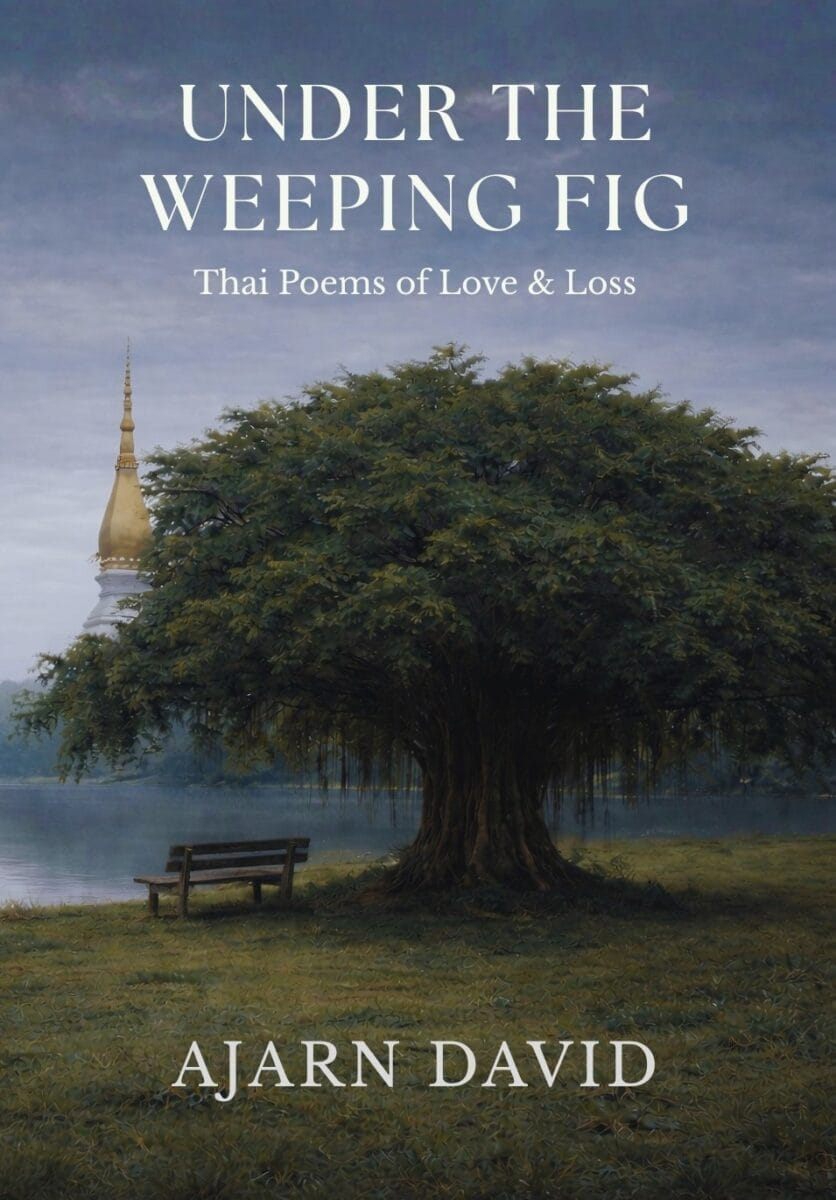
Under the Weeping Fig
H
is love
was like a temple
nestled deep
in the forests of Phu Phan,
a special place
known only to a few
where she could take refuge
from the world,
a quiet place
where she could sit
and be still,
a mystical place
that never asked her
to explain herself
or why
she had come.
#26
ความรักของเขา เปรียบเสมือนวัดที่ร่มรื่น
ซ่อนตัวอยู่ในผืนป่าภูพาน
เป็นสถานที่พิเศษมีเพียงไม่กี่คนที่รู้จัก
ที่เธอจะกลับไปพักพิงได้
เมื่อโลกภายนอกวุ่นวายเกินไป
ที่แห่งนั้นมีความขลังบางอย่าง
อ่อนโยน แต่มั่นคง
ไม่เคยขอให้เธออธิบายตัวเอง
หรือว่ามาเพราะอะไร
kwaam-rák kăwng kăo · bprìap sà-mĕuan wát têe rôm-rêun
sâwn dtua yòo nai pĕun-bpàa poo-paan
bpen sà-tăan-têe pí-sèt mee piang mâi gèe kon têe róo-jàk
têe ter jà glàp bpai pák-ping dâi
mêua lôhk pai-nâwk wûn-wai gern-bpai
têe hàeng nán mee kwaam-klăng baang-yàang
àwn yohn · dtàe mân kong
mâi koei kŏr hâi ter à-tí-bai dtua-eng
rĕu wâa maa prór à-rai
About the Translations
In Under the Weeping Fig, the Thai poems have been approached a bit differently from those in Poems from Sakon Nakhon. In that earlier collection, the Thai versions were written as translations after the English poems were already finished.
Here, the process moved more naturally between the two languages. The English poems often arrived close to complete, while the Thai versions tended to begin as rough sketches that were later shaped and refined. Because of this, the Thai and English pieces aren’t direct translations of each other, but two parallel expressions of the same experience—each influenced by the nature of its language.
There’s also a noticeable shift in tone. Poems from Sakon Nakhon leaned more toward a literary style, with more formal Thai vocabulary. In this collection, the Thai is often more conversational—the kind of language you might hear in a real, heartfelt exchange. That shift helps each version feel more natural on its own, while also giving bilingual readers something richer when moving between the two.
While the work is grounded in an appreciation for traditional Thai poetry, these love poems are written in free verse, a form that is still finding its place in Thailand. This collection offers one perspective within that ongoing evolution, and it also reflects a broader hope: that more Thai writers might explore bilingual Thai–English poetry as a way to reach wider audiences and share their language more widely.
At the same time, the use of free verse connects to something more personal in the writing itself: a focus on simplicity, clarity, and the strength of fewer words. The poems, in both languages, invite a slower kind of reading—one that lingers a bit, and allows meaning to unfold more quietly.